
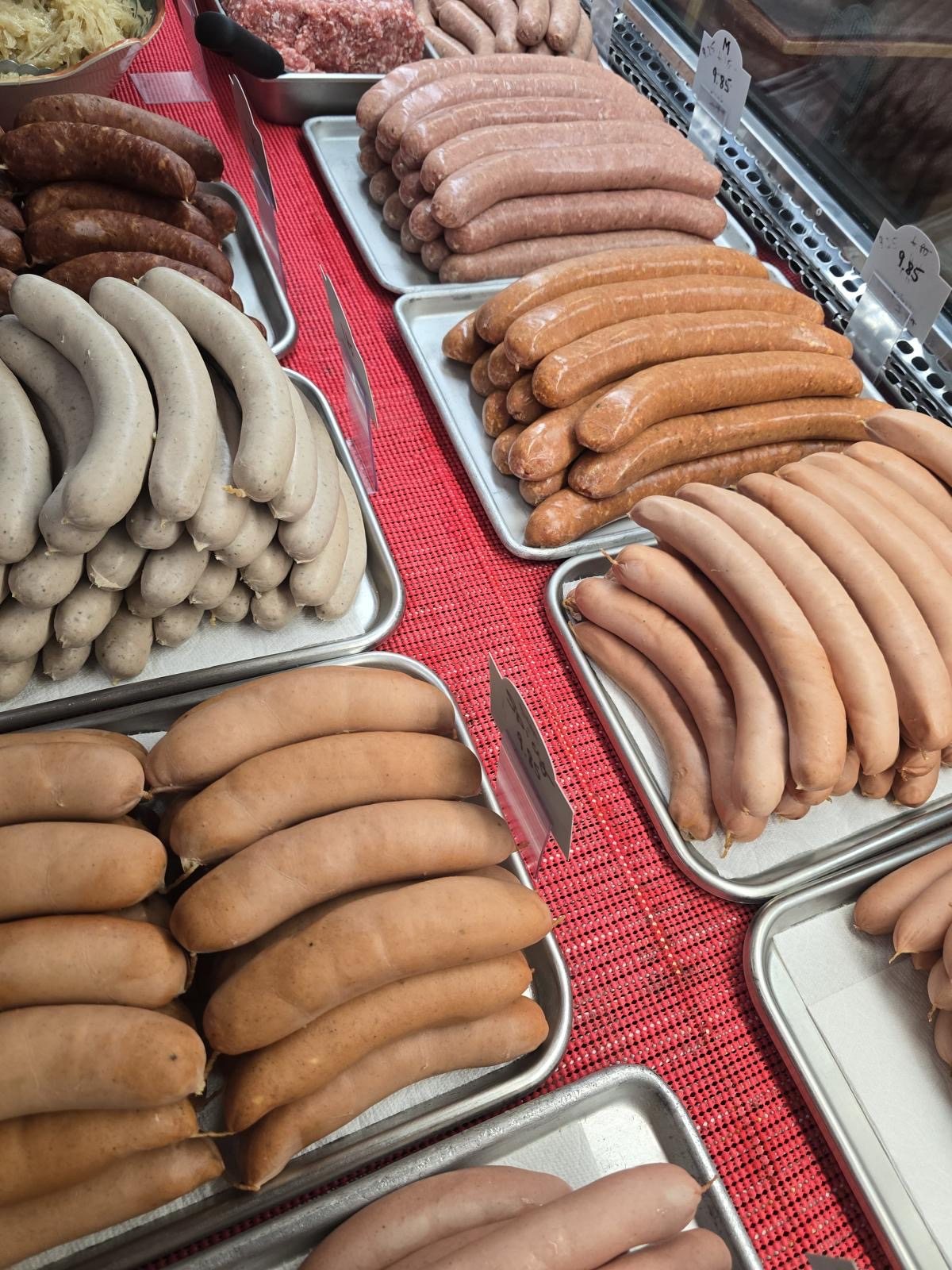
Of all the sausages in our case, the Weisswurst is the one that generates the most questions — and the most devotion. Pale as a Munich morning, studded with parsley, delicately flavored with lemon and mace, it is Bavaria's proudest breakfast tradition. It is also the source of a saying you'll hear in every Munich beer hall: Weisswurst should never hear the church bells strike noon.
Very finely ground veal and pork, fresh parsley, lemon zest, and a whisper of onion and mace, packed into a natural casing that is softer and paler than most. There is no smoke, no curing, no aggressive spice — the Weisswurst is the quiet aristocrat of the sausage family. Ours follows the Munich formula: veal and pork, nothing to hide behind.
Here is the single most important instruction you will read today: never boil a Weisswurst. Boiling bursts the casing and washes the flavor down the drain. The correct method could not be gentler:
The traditionalist zips the casing open lengthwise and rolls the meat out onto the plate. The practical simply cut it lengthwise and eat around the skin. The modern (and our recommendation for first-timers) eats it whole, skin and all, dunked in sweet Bavarian mustard. That mustard — sweet, not hot — is not optional in our opinion. Its honeyed warmth against the delicate veal is the entire point.
A Weisswurst, a warm pretzel, sweet mustard and a Weissbier: four things, one perfect morning.
Before refrigeration, fresh Weisswurst genuinely couldn't survive the afternoon — so the tradition wrote itself into poetry. Today it's less a rule than a ritual, but rituals matter. That's why our From-the-Kitchen menu serves the Weisswurst plate with a warm pretzel from open onward, and why the regulars still order it with their morning coffee. Some customs deserve to outlive their reasons.
Come by before noon if you'd like to do it the old way. We'll have the sweet mustard waiting.